
All About Liquid Aeration
Liquid Aeration And How it Compares to Core Aeration
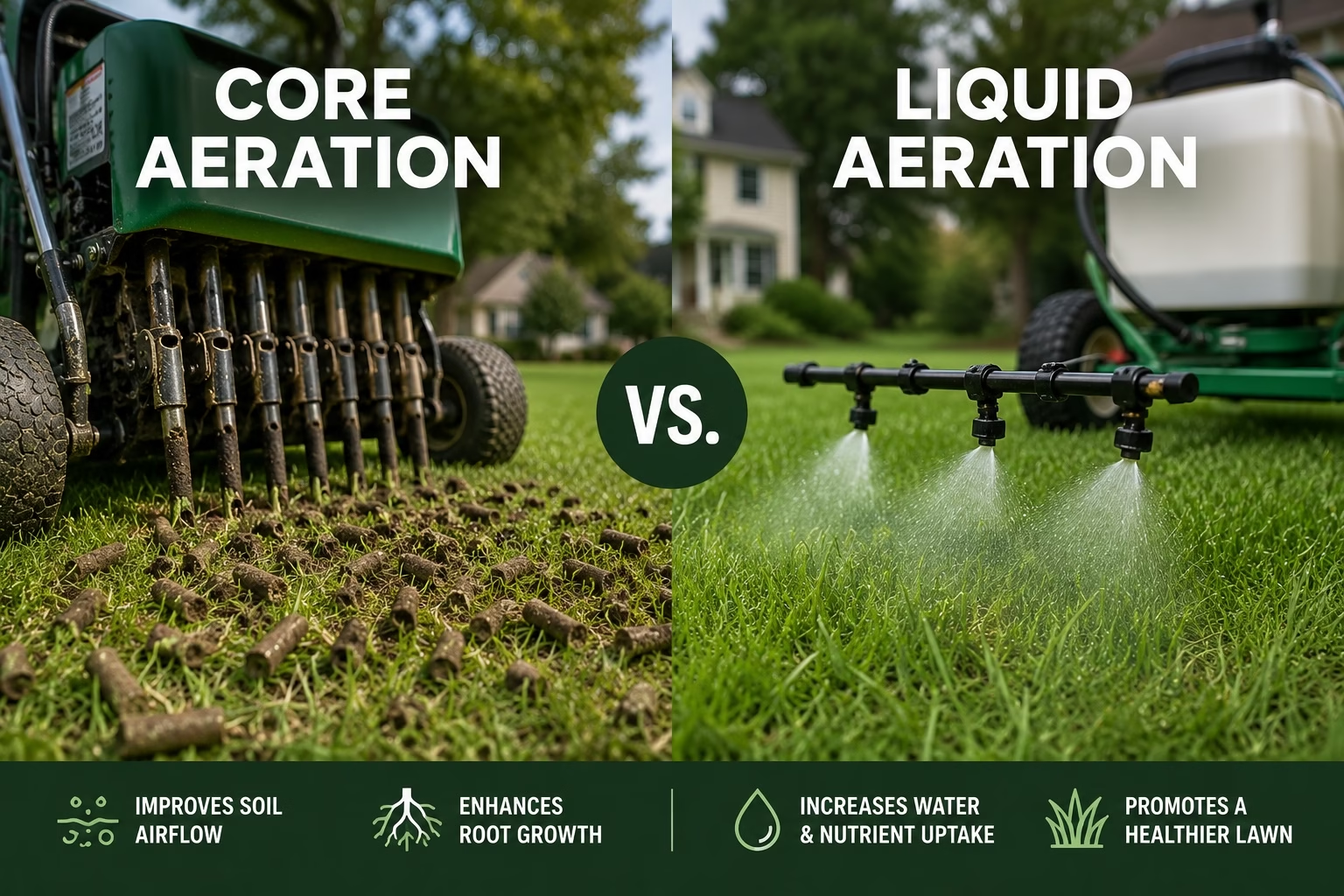
Liquid aeration is a type of soil treatment that has been developing for years, but has only started to pick up mainstream momentum more recently. To understand the growing popularity of liquid aeration, the different types of products being used, and how it compares with the traditional mechanical aeration options, we must understand what aeration is, what its purpose is for building a healthy lawn, and how the best types of liquid aeration products actually work.
As a broad term, aeration is the process of air circulating through a medium. When this medium is soil, aeration refers more specifically the presence of air gaps within the soil system. These air gaps are the defining factor in determining the porosity of the soil, which is how much pore space for air and liquids there is between the solid particles that make up the soil structure. Porosity is inversely related to the soil’s bulk density, which is the ratio between the mass of the soil and its volume. For our purposes, bulk density is a measure of compaction, and porosity is a measure of aeration.
For a compacted soil system, or one with a high bulk density, the turf management process of aerating is intended to relieve this compaction by increasing the porosity of the soil system. Traditionally, this is done mechanically by removing vertical plugs of soil at a depth of usually two to four inches, a process known as core aeration. Core aeration creates macropores, the primary function of which is to allow airflow. As these macropores collapse, they continue to provide room for the movement of water, roots, and microorganisms.
Critics of core aeration cite several issues with both the method and result of this process for aerating soil. First, from the perspective of professional turf management on residential properties, there is an impracticality to the process. Because there is a mechanical invasion of the lawn’s surface, shallow underground structures like cables and sprinkler heads can be put at risk of damage, and turf can be significantly damaged by the wear and tear of the machinery involved. Second, a fair argument can be made that cores are generally being removed from maybe twenty percent of the soil surface area, which means that eighty percent of the soil surface isn’t being manipulated at all. Third, because a depth of only a few inches from the surface is being targeted with core aeration, soil compaction can persist at lower depths. As a result of these arguable imperfections with core aeration, chemical methods of aeration are picking up steam as better liquid aeration products are being introduced to the market.
While there are several successful lines of liquid aeration products that utilize different methods such as wetting agents or polymers to make changes to the soil’s porosity and bulk density, the type of product gaining the most attention and which is being utilized by turf management professionals like those at Picture Perfect Lawn Maintenance is the kind that utilizes potash and humic acid to accomplish two unique and valuable things.
First, this kind of liquid aeration aids in the development of a deep and complex root system for established turf. Roots are natural aerators in soil systems. A strong root system increases the porosity of the soil system, allowing air and water to move along the root system more freely. Big picture, this also means that the turfgrass is better able to absorb and make use of water and nutrients, creating not only a healthier soil system, but a healthier lawn as well.
Second, potash and humic acid work together to basically reorganize the soil system at a chemical level. This liquid aeration breaks the bonds of mineralized nutrients and other soil structures, converting them into a chemical state more easily transported and taken up by those complex roots we just mentioned. As a result of the breaking of these bonds, microfissures are created in the soil structure, providing the micropores that are key to soil aeration and porosity. It also creates smaller soil particles, increasing the surface area of the soil system as a whole. A greater soil surface area means a higher cation exchange capacity, which means that nutrients, water, and microbes have more places in the soil to which they can attach, bond, and linger to aid in greater root absorption.

While the science behind liquid aeration is exciting and showing great results in field tests, there are lawns for which core aeration may still be necessary. The greatest example of this is a property that does not already have a mature, established lawn. Core aeration at the time of seeding provides a foothold for new grass development because the grass seed is able to nestle in the hole left by the core. An established lawn provides the natural shelter and stability new seedlings need for development, but a bare area relies on the holes left by core aeration to maximize on the success of a seeding service.
Despite the method of aerating a lawn, it is undoubtedly a beneficial service for a yard to have done each year. Soil compaction is caused by many natural weathering factors, and while nature does have its own methods of aerating, it often needs some help from a turf management professional along the way. If you currently receive a core aeration service, but are interested in exploring liquid aeration alternatives, be sure to contact your local fertilizer company today.


